The story of how an unemployed single mother who had written a children’s book no one would publish became the author of the world’s best-selling books has become something close to myth.
But J.K. Rowling’s seemingly magical journey from rags to riches, or from struggling aspiring writer to the creator of the Harry Potter everyone knows, comes down to stubbornness and hard work.
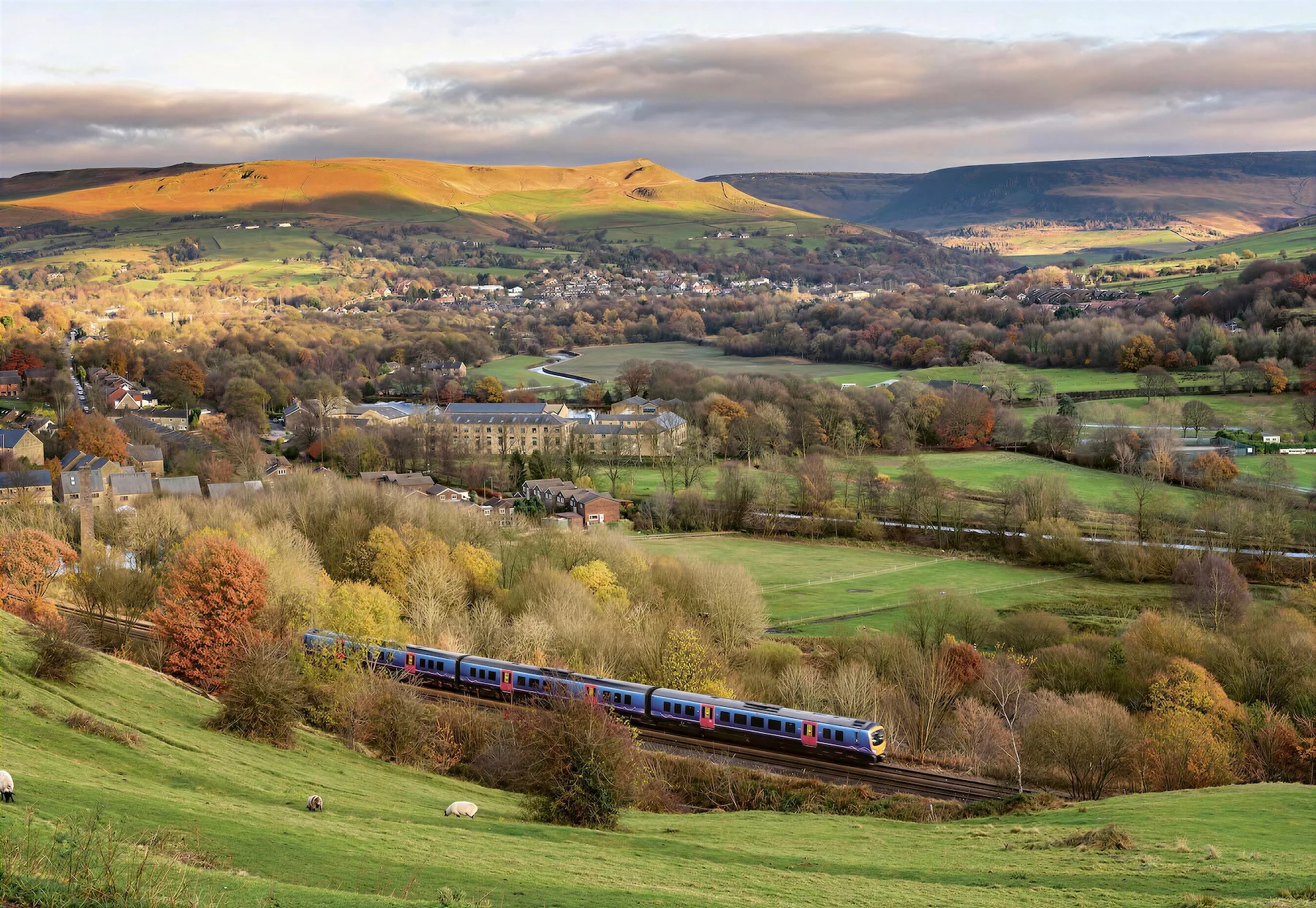
Of all the places that might have inspired her, it is striking that Rowling first had the idea for the boy wizard on a train.
And that train was a fairly ordinary one, nothing like the chugging Hogwarts Express.
In 1990, Rowling was taking whatever work she could find in London, from temping to secretarial jobs.
One of them was at a publisher, where her job was to send rejection letters to writers who had submitted manuscripts.
In her spare moments she poured herself into writing a couple of novels for adults. (She always spent her breaks at work writing.)
Her boyfriend at the time lived in Manchester in northwest England. To see him, Rowling had to catch a train from Euston station in London every weekend.
The arrangement suited neither of them, so her boyfriend persuaded her to find work in Manchester and move in with him.
She finally agreed and found jobs at the Manchester Chamber of Commerce and the University of Manchester. These too were secretarial jobs, of course, and far from fulfilling.
Before that, the couple began looking for a place to live together.
But none of the homes shown by smartly dressed real estate agents were any good. After a disappointing weekend, tired and fed up, Rowling boarded a train back to London at Manchester Piccadilly station.
Waiting for her in London was a single room above a sporting goods store in Clapham Junction. Another Monday morning would begin, and another day in an office somewhere in the city.
To make matters worse, the train, which usually took about two and a half hours, was badly delayed. It took a full four hours to reach Euston.
But the delay turned out to be a stroke of luck for her.
As the carriage sat motionless, Rowling was gazing out the window at cows in a field. It was then that the image of Harry Potter, a slight boy with green eyes and cracked round glasses, came into her head suddenly and fully formed.
In an instant she pictured Harry Potter traveling to a boarding school for wizards.
More ideas came flooding in. She rummaged through her bag for a pen to write them down but found nothing she could use. She could not even find an eyeliner pencil.
Rowling later admitted, “I was too shy to ask anyone on the train if I could borrow a pencil.”
But not having a pen turned out for the better. It meant she spent the rest of the journey thinking up all kinds of ideas for the book.
As the train lurched forward and made its way through Cheshire, Staffordshire, Northamptonshire, Buckinghamshire and Hertfordshire, Ron Weasley and Hagrid, Peeves and friends and Hogwarts School of Witchcraft and Wizardry itself all stirred to life.
Rowling could not put any of it on paper until she was finally back in Clapham.
She recalled that it was in that apartment that she “laid the first bricks of Hogwarts.”
But it would be another five years before “Harry Potter and the Philosopher’s Stone” was finished, and two more before the book was published and on bookstore shelves.
Through all that time Rowling kept writing.
With firm resolve she not only finished the manuscript of the first book but also, even after it became a success, committed herself to finishing the plot of the entire Harry Potter series.
She knew well that writers who achieve great success can easily be crushed by the enormous pressure of a follow-up and find themselves unable to do their best.
Another cherished element of the series is the famous Platform 9¾ at King’s Cross station, where the Hogwarts Express departs.
Its origins, too, can be traced back to Rowling’s train trips to Manchester.
In a 2001 interview with the BBC, Rowling confessed that she had mixed up King’s Cross with Euston.
“I wrote about Platform 9¾ when I was living in Manchester, and I pictured the wrong platforms. I was actually thinking of Euston. That’s why anyone who goes to Platforms 9 and 10 at King’s Cross will realize they look nothing like the Platforms 9 and 10 in the book. So I have to confess: I was in Manchester and couldn’t check.”
By Travis Elborough
Travis Elborough is a British writer and social commentator who writes about popular culture, history and place. He won Illustrated Book of the Year at the 2020 Edward Stanford Travel Writing Awards. His books include “The Writer’s Journey” and “Atlas of Forgotten Places.”